

How to wear an engagement ring and wedding band
Most people have a loose idea of how to wear an engagement ring with wedding bands, then hit a tangle of questions once the rings are actually on their finger. Which goes first? Left hand or right? What about a band that doesn’t sit flush? And do you need to solder them together?
Good news. There are traditions, there are modern takes, and there are a handful of practical tips that keep your rings comfortable and safe. From Melbourne aisles to beach elopements in Broome, whether you're accessorizing with jewellery, experimenting with different band styles, or focusing solely on your rings and wedding bands, the best approach is the one that feels right and suits your lifestyle.
The quick version
In Australia, the classic stack is wedding band first, engagement ring above it, both on the ring finger of the left hand.
If that feels awkward or the rings don’t sit nicely, swap the order, move one to the right hand, or split the stack across hands.
Your ceremony plan matters. Decide ahead of time where your engagement ring will sit on the day so the wedding band can slide home smoothly.
Why the band usually goes closest to the heart
The tradition traces back to the old vena amoris myth, the belief that a vein ran straight from that finger to the heart. It is a sweet story, even if the anatomy doesn’t check out.
Australia follows British custom, which places both rings on the left hand. In parts of Europe and South America, the rings go on the right. Some couples switch hands after the ceremony, some don’t. There’s no rule that trumps comfort or cultural meaning for you and your partner.
A few reasons people stick with the classic order:
The wedding band represents the marriage itself, so it sits closest to the skin
The engagement ring frames the band and can help keep it from spinning.
The set often was designed with this order in mind.
What to do on the wedding day
It is surprisingly easy to overthink this. A few simple plans remove the fuss:
Move your engagement ring to your right hand before the ceremony, then move it back on top during signing or after photos.
Wear the engagement ring on your left hand during the ceremony, then slide the band over the top. Later, swap them so the band sits underneath.
Hand your engagement ring to a trusted friend for safekeeping and put it back on after the ceremony.
Wear only the wedding band on the day. Minimal, timeless, and no fuss with repositioning—ideal for those who want their wedding bands to take center stage.
If you’re exchanging rings in a different cultural order, brief your celebrant so the moment flows.
Fit and comfort come first
Two rings need to coexist comfortably. A few design choices make all the difference.
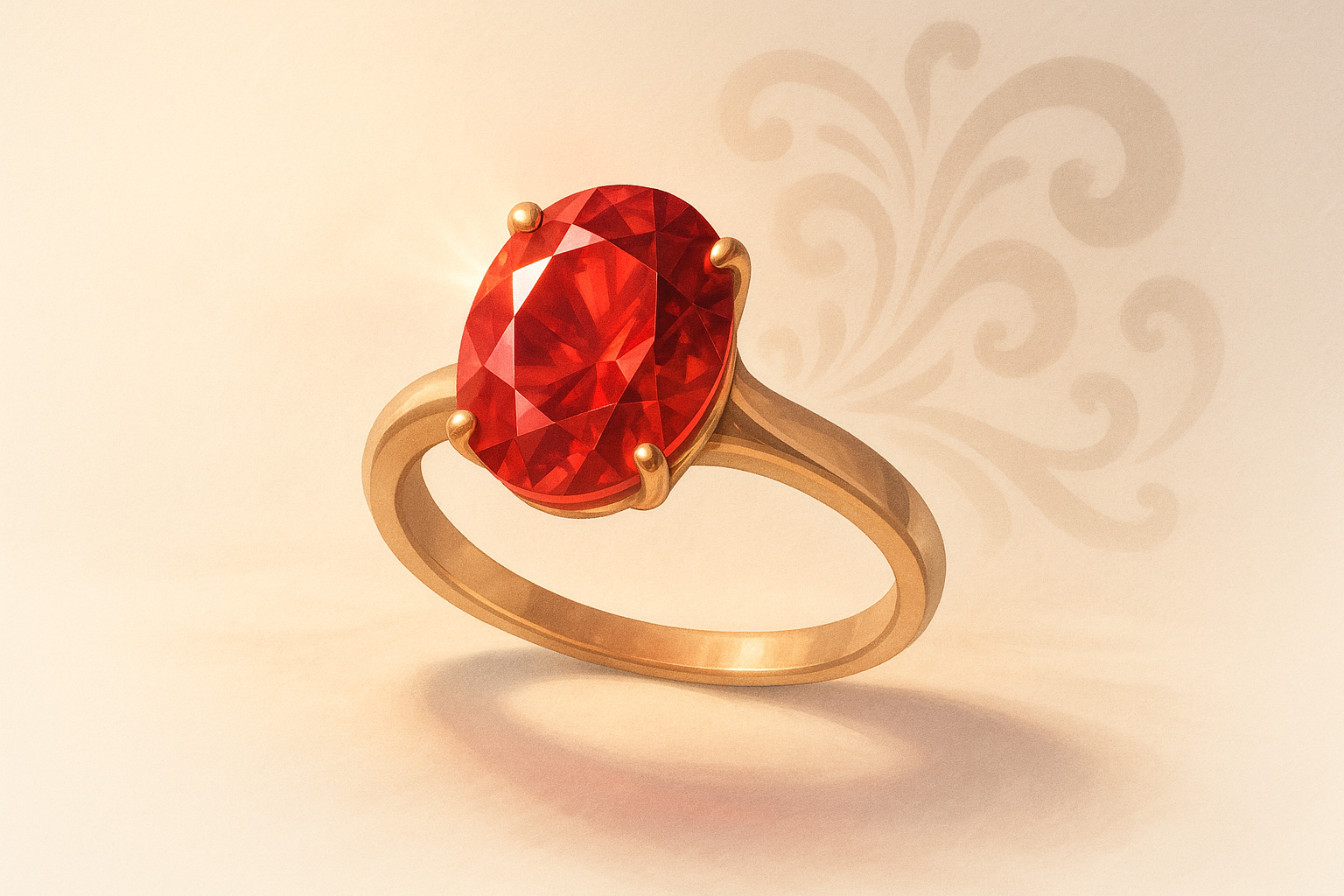
Height and profile: A high-set solitaire often needs a contoured or notched band to sit flush. Low-profile settings sit closer and feel secure for hands-on work.
Spacer ring: A very slim metal ring, usually platinum or gold, can sit between the band and engagement ring to prevent rubbing.
Guard rings: Thin bands on either side can stop spinning and protect settings with small pavé diamonds.
Soldering: Joining the band and engagement ring into one piece keeps them aligned. Great for comfort and reduced wear, but less flexible if you want to wear them separately later.
Metal hardness: Platinum is more durable than gold, so a platinum ring can create wear on a softer gold ring beside it. If you mix metals, consider a spacer.
Size and swelling: Fingers tend to be smaller in the morning and larger in heat or after exercise. Australian summers amplify this. Try sizing in the afternoon, and consider sizing beads or a slightly larger fit for thicker stacks.
Knuckle fit: If your knuckles are larger than the base of your finger, ask about hinged shanks or interior speed bumps that keep the ring snug without making it impossible to get on and off.
PurpleMay has a long history of building contoured and fitted bands to nest perfectly with existing rings. A quick CAD visualisation and a wax or 3D print let you see how the band will sit before anything is set in precious metal.
Protecting your stones when stacking
Not all gemstones enjoy daily friction from a neighbouring ring. A few facts help you choose wisely.
Diamond and sapphire are tough daily wear choices. Emeralds can be brittle. Opal and morganite scratch more easily.
Halo settings and pavé shoulders rub against other rings if the profiles collide. A contoured band or spacer ring keeps contact to a minimum.
Bezels and low rub-over settings protect edges and sit well with stackers. Prong-set stones may catch or wear if pressed against another ring.
If you use an ultrasonic cleaner at home, avoid it for emeralds, opals, and treated stones. Warm soapy water and a soft brush is safer.
Schedule a quick check every 6 to 12 months for loose stones, especially if you wear a two-ring stack daily.
Styles that work beautifully
Some people like a crisp, flush pair. Others prefer texture and space. Here are popular band styles and ways to wear, style, and incorporate wedding bands into your rings.
|
Style option |
How it’s worn |
Best for |
A small watch-out |
|
Classic stack |
Wedding band under, engagement ring on top, left hand |
Timeless look, easy daily wear |
Can rub if profiles don’t match |
|
Inverted stack |
Engagement ring under, wedding band on top |
Protects soft centre stones; halo fans |
Band may slide around without guard |
|
Right-hand engagement |
Band on left, engagement ring on right |
Comfort, wide or bold engagement rings |
Some miss the stacked look |
|
Split stacks |
Wedding band on left, an eternity or guard ring on right with engagement |
Balance across hands, symmetry |
Harder to photograph as a single set |
|
Contoured band |
Custom band curves to engagement ring |
Solitaires or halos that need a nest |
Locked into that engagement ring shape |
|
Negative space |
Straight band with small gap under stone |
Modern, airy aesthetic |
Gap accentuates height, not for everyone |
|
Mixed metals |
Yellow band, white or platinum engagement, or vice versa |
Contrast and character |
Different wear rates between metals |
|
Soldered set |
Rings permanently joined |
Comfort, low maintenance |
Less flexibility day to day |
Matching metals and finishes
Metal choices: 18k gold gives a rich colour and resists wear better than 14k. Platinum is dense, durable, and hypoallergenic for most people.
Patina: Platinum doesn’t lose metal when it scratches; it displaces and develops a soft patina over time. White gold stays brighter with rhodium plating, which needs redoing every 12 to 24 months depending on wear.
Skin sensitivity: If you react to nickel in some white gold alloys, consider platinum or nickel-free white gold.
Finish: Matte finishes hide minor scratches but will polish up with friction. High polish looks classic and is easy to refresh.
Aussie lifestyle notes: Saltwater and sunscreen won’t destroy a ring, but they build grime and can loosen prongs over time. Rinse after beach days and book periodic checks.
Ceremony traditions across cultures
You might follow family tradition or set your own rhythm.
Some European couples wear their engagement ring on the right hand before marriage, then move it to the left with the wedding band afterwards.
In parts of Germany and the Netherlands, the band often stays on the right hand.
Many couples in Australia stick with left-hand stacking, while others choose symbolism that suits their own story, especially in same-sex weddings or when engagement rings are exchanged by both partners.
There’s no wrong move here. Wedding bands mark a promise, not a rule book.
When lifestyle shapes your stack

Your job and hobbies decide how comfortable a stack will be.
Healthcare, hospitality, childcare: A low-profile band with a snug fit is practical. Some people wear a plain band to work and switch to the full stack off duty.
Gym and sports: Consider a silicon stand-in during workouts. Metal rings can deform under load or catch.
Makers, tradies, gardeners: Avoid wearing rings around machinery. Even plain bands can be risky. Keep a safe ring dish by the door.
Frequent travellers: Insure your set, keep proof of purchase and valuations, and use a discreet pouch in your carry-on.
Care that actually keeps rings shining

Weekly: Warm water, a drop of mild dish soap, soft toothbrush, rinse and pat dry. Avoid harsh chemicals.
Monthly: Check under the setting. If you see a dull film, it is usually lotion or sunscreen trapped under the stone.
Twice a year: Professional clean and inspection. Prongs wear slowly, then very quickly.
Storage: Separate pouches or compartments so metal and stones don’t rub. Diamonds can scratch other gemstones.
When to take them off: Heavy lifting, chlorinated pools, the beach, and while applying thick creams. A five-second pause today saves a repair later.
Ring sizing tips that save surprises

Australia uses alphabet ring sizes. Half sizes and even quarter sizes are possible if the finger sits between standard points.
Time of day: Size in the afternoon when your hands are naturally a bit larger.
Season: Try a fit check in both summer and winter if you can. Heat, humidity, and hydration move the needle.
Stack width: Wider stacks feel tighter. If you plan a thick set, aim a fraction up in size.
Knuckle vs base: If the ring spins once it’s over the knuckle, consider sizing beads or an internal comfort curve.
A few real-life stacking wins

The beach lover: A Melbourne couple chose a low-profile oval solitaire with a slim contoured band. She wears a plain platinum band for saltwater days and swaps back to the full stack for dinner.
The artist: He wanted mixed metals, texture, and a variety of band styles. A brushed yellow gold band paired with a white gold engagement ring created contrast while keeping lines simple.
The nurse: A bezel-set sapphire sits low on the hand. Her wedding band is a fine diamond half band that tucks under the bezel with no snag points, highlighting the significance of wedding bands in creating a harmonious look.
The heirloom keeper: A vintage halo didn’t accept a straight band without a gap. A custom curved band followed the halo’s arc perfectly, and a 1 mm platinum spacer protects the antique prongs.
Working with a jeweller on a fitted band

A good fit between engagement ring and wedding band feels like two pieces made as one, especially when considering wedding bands that perfectly complement the engagement ring design. Here’s how a typical custom fit comes together at a studio like PurpleMay in Melbourne.
Bring your engagement ring and any inspiration images.
The design team measures the setting height and angles, then sketches a profile that clears the stone edges.
CAD renders show how the band hugs the engagement ring. Tiny tweaks here prevent friction later.
A 3D print or wax model lets you try the fit on your hand.
Metal, stone options, and finish are finalised. Think about future resizing and maintenance before you lock it in.
Final fitting checks that both rings sit level and comfortable.
PurpleMay grew up in workshops where precision came first. That tradition continues through female artisans trained in setting, engraving, and fine finishing, building rings that look delicate but wear tough. The brand’s roots in Melbourne give it an easy local touch, while the custom bench skills sit at high-jewellery standards.
Do the band and engagement ring have to match?

Some couples love a perfectly matched set. Others prefer contrast.
Perfect pair: Same metal and finish, matched profiles. Looks intentional and polished.
Complementary: Mixed metals, different textures, similar proportions. Adds character without feeling messy.
Eclectic: Stacked bands with a colourful centre stone. Great for people who like to switch things up.
You can start traditional and change the stack over time. Anniversaries are a natural moment to add a guard ring or swap a straight band for a contoured version.
Tiny details that make a big difference

Millgrain edges on a band hide micro scratches and add vintage charm.
Knife-edge bands look slim from above but have presence from the side.
Low-dome profiles slide past knuckles easily.
Inside engraving turns a ring into a private keepsake. Dates, initials, a short phrase.
If your engagement ring is wide, a very thin band softens the stack. If your engagement ring is delicate, avoid pairing it with a heavy band that visually overwhelms it.
FAQs, quick and candid
Which goes first? Traditionally, the wedding band sits on the finger, the engagement ring sits on top. Switch if it feels better the other way.
Do I need to solder them? Only if you want a locked-in feel and less wear between rings. If you love swapping stacks, keep them separate.
Can I wear just my band? Absolutely. Many people do for work, travel, or simplicity.
Sleep and shower with rings on? Better to take them off for both. Soap film and pressure from bedding can loosen prongs over time.
Eternity band with prongs facing another ring, yes or no? Use a spacer or a contoured fit. Tiny diamonds can chew into neighbouring metal.
I have an opal or emerald. Any special care when stacking? Avoid friction by using a spacer, and skip ultrasonic cleaners. Gentle wash only.
Rings tell your story, and the way you wear them is part of that. Whether you lean classic, go modern with mixed metals, or ask a jeweller to craft a band that hugs your engagement ring like it was always meant to be there, the aim is simple. Comfortable, secure, and a look that feels like you.
If you want help shaping that fit, PurpleMay‘s Melbourne studio can map your ring’s profile and build a band that nests cleanly, protects your stones, and carries the details you love. It is your set, your rules, and your hands deserve something that suits real life.


Leave a comment
This site is protected by hCaptcha and the hCaptcha Privacy Policy and Terms of Service apply.